This site is intended for US healthcare professionals only

VOYXACT is indicated to reduce proteinuria in adults with primary immunoglobulin A nephropathy (IgAN) at risk for disease progression

APRIL=A PRoliferation-Inducing Ligand; Gd-IgA1=galactose-deficient IgA1;
IgA=immunoglobulin A.

Why VOYXACT®
(sibeprenlimab-szsi)?

Explore the ongoing risk of IgA nephropathy

Understand the Why

Start a Patient Today

Take the first step toward treatment with VOYXACT

Download the Start Form

VOYXACT delivers significant proteinuria reduction

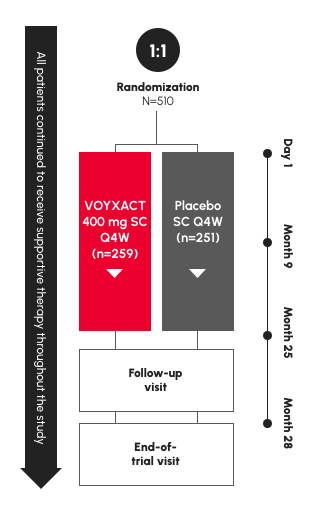
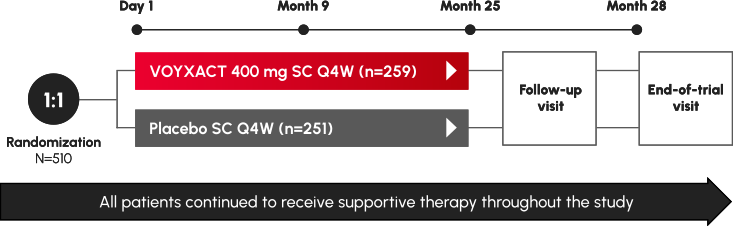
VISIONARY is a randomized, double-blind, placebo-controlled study of 510 adults with biopsy-confirmed IgA nephropathy, an eGFR ≥30 mL/min/1.73 m2, and proteinuria (defined as either uPCR based on 24-hour urine collections ≥0.75 g/g or urine protein ≥1.0 g/day). Patients received VOYXACT (n=259) or placebo (n=251) subcutaneously every 4 weeks and remained on a stable and maximally tolerated dose of ACE inhibitors and/or ARBs with or without an SGLT2 inhibitor throughout the study. An interim analysis for efficacy was conducted on the first 320 randomized patients who reached the Month 9 visit (VOYXACT, n=152; placebo, n=168). The VISIONARY study is ongoing.*

* The VISIONARY study will conclude in 2026.

Estimated geometric mean percentage change at 9 months compared with baseline. Data were included in the analysis regardless of early treatment discontinuation and initiation of confounding therapy (treatment policy strategy). Missing data were imputed using multiple imputation.

96.5% CI corresponds to the two-sided significance level of 0.035 for the interim analysis.

ACE=angiotensin-converting enzyme; ARB=angiotensin receptor blocker; eGFR=estimated glomerular filtration rate; SGLT2=sodium-glucose cotransporter 2; uPCR=urine protein-creatinine ratio.

Demonstrated safety profile

Median exposure was 44 weeks and 48 weeks for VOYXACT and placebo, respectively Infections Injection site reactions Upper respiratory infection Erythema VOYXACT (n=259) Placebo 
(n=251) Adverse Reactions in ≥10% of Patients Treated With VOYXACT and at a Higher Incidence Than Placebo 49% 45% 15% 14% 24% 23% 13% 12%
  • Most adverse reactions were reported as mild or moderate in severity and resolved without treatment interruption or discontinuation
  • VOYXACT suppresses the immune system by reducing antibody production, which may increase the risk of infections
  • Before initiating VOYXACT, assess patients for active infections. During treatment, monitor patients for signs and symptoms of infection
  • VOYXACT is a monoclonal antibody, not a steroid
  • No REMS required

REMS=Risk and Evaluation Mitigation Strategy.

Mechanism of Action

See how VOYXACT 
targets APRIL

View the MOA

APRIL=A PRoliferation-Inducing Ligand.
Dosing

Explore the recommended dosing and administration

Explore Dosing

Patient Support

Discover available resources for your patients

Learn More

APRIL=A PRoliferation-Inducing Ligand.

Ready to get started?

A representative can help.

  • Reference:

    1. Cheung CK, et al. Front Nephrol. 2024;3:1‍3‍4‍6‍7‍6‍9.
ISI Block Title

INDICATION and IMPORTANT SAFETY INFORMATION for VOYXACT® (sibeprenlimab-szsi)

INDICATION

VOYXACT is indicated to reduce proteinuria in adults with primary immunoglobulin A nephropathy (IgAN) at risk for disease progression.

This indication is approved under accelerated approval based on reduction of proteinuria. It has not been established whether VOYXACT slows kidney function decline over the long-term in patients with IgAN. Continued approval for this indication may be contingent upon verification and description of clinical benefit in a confirmatory clinical trial.

IMPORTANT SAFETY INFORMATION

CONTRAINDICATION

VOYXACT is contraindicated in patients with serious hypersensitivity to sibeprenlimab-szsi or any of the excipients of VOYXACT.

WARNINGS AND PRECAUTIONS

Immunosuppression and Increased Risk of Infections: VOYXACT suppresses the immune system by reducing antibody production, which may increase the risk of infections. Patients with chronic or recurring infections may have an increased risk of serious infection. In clinical trials, infections occurred in 49% of patients treated with VOYXACT compared with 45% of patients treated with placebo.

Before initiating VOYXACT, assess patients for active infections. During treatment, monitor patients for signs and symptoms of infection. If a serious infection develops, consider interrupting VOYXACT until the infection is controlled.

Immunosuppression and Immunization Risks: Because of its mechanism of action, VOYXACT may interfere with immune responses to vaccines and increase the risk of infection from live vaccines. Live vaccines are not recommended within 30 days prior to initiation of VOYXACT or during treatment with VOYXACT as safety has not been established. No data are available on the secondary transmission of infection from persons receiving live vaccines to patients receiving VOYXACT or on the efficacy of immunizations administered while receiving VOYXACT.

Common Adverse Reactions: The most common adverse reactions (reported in ≥10% of patients treated with VOYXACT and at a higher incidence than placebo) in patients treated with VOYXACT and placebo, respectively, were infections (49% versus 45%) and injection site reactions (24% versus 23%). The most common infection was upper respiratory infection (15% versus 14%), and the most common injection site reaction was injection site erythema (13% versus 12%). Most adverse reactions were reported as mild or moderate in severity and resolved without treatment interruption or discontinuation.

Pregnancy: There are no available data on VOYXACT use in pregnant women to evaluate for a drug-associated risk of major birth defects, miscarriage or other adverse maternal or fetal outcomes. Monoclonal antibodies, such as sibeprenlimab-szsi, can be actively transported across the placenta as pregnancy progresses; therefore, potential effects on a fetus are likely to be greater during the second and third trimester of pregnancy.

Lactation: There are no data on the presence of sibeprenlimab-szsi in human milk, the effects of sibeprenlimab-szsi on the breastfed infant, or the effects of sibeprenlimab-szsi on milk production.

Pediatric Use: Safety and effectiveness of VOYXACT in pediatric patients have not been established.

Geriatric Use: Clinical studies of VOYXACT did not include sufficient numbers of patients aged 65 and over to determine whether they respond differently from younger adult patients.

Pregnant women exposed to VOYXACT, or their healthcare providers, should report VOYXACT exposure by calling 1-833-869-9228 or visiting 
www.VOYXACT.com

To report SUSPECTED ADVERSE REACTIONS, contact Otsuka America Pharmaceutical, Inc. at 1-800-438-9927 or FDA at 1-800-FDA-1088 (www.fda.gov/medwatch).

Please see FULL PRESCRIBING INFORMATION.

Important Safety Information
ISI Block Title

INDICATION and IMPORTANT SAFETY INFORMATION for VOYXACT® (sibeprenlimab-szsi)

INDICATION

VOYXACT is indicated to reduce proteinuria in adults with primary immunoglobulin A nephropathy (IgAN) at risk for disease progression.

This indication is approved under accelerated approval based on reduction of proteinuria. It has not been established whether VOYXACT slows kidney function decline over the long-term in patients with IgAN. Continued approval for this indication may be contingent upon verification and description of clinical benefit in a confirmatory clinical trial.

IMPORTANT SAFETY INFORMATION

CONTRAINDICATION

VOYXACT is contraindicated in patients with serious hypersensitivity to sibeprenlimab-szsi or any of the excipients of VOYXACT.

WARNINGS AND PRECAUTIONS

Immunosuppression and Increased Risk of Infections: VOYXACT suppresses the immune system by reducing antibody production, which may increase the risk of infections. Patients with chronic or recurring infections may have an increased risk of serious infection. In clinical trials, infections occurred in 49% of patients treated with VOYXACT compared with 45% of patients treated with placebo.

Before initiating VOYXACT, assess patients for active infections. During treatment, monitor patients for signs and symptoms of infection. If a serious infection develops, consider interrupting VOYXACT until the infection is controlled.

Immunosuppression and Immunization Risks: Because of its mechanism of action, VOYXACT may interfere with immune responses to vaccines and increase the risk of infection from live vaccines. Live vaccines are not recommended within 30 days prior to initiation of VOYXACT or during treatment with VOYXACT as safety has not been established. No data are available on the secondary transmission of infection from persons receiving live vaccines to patients receiving VOYXACT or on the efficacy of immunizations administered while receiving VOYXACT.

Common Adverse Reactions: The most common adverse reactions (reported in ≥10% of patients treated with VOYXACT and at a higher incidence than placebo) in patients treated with VOYXACT and placebo, respectively, were infections (49% versus 45%) and injection site reactions (24% versus 23%). The most common infection was upper respiratory infection (15% versus 14%), and the most common injection site reaction was injection site erythema (13% versus 12%). Most adverse reactions were reported as mild or moderate in severity and resolved without treatment interruption or discontinuation.

Pregnancy: There are no available data on VOYXACT use in pregnant women to evaluate for a drug-associated risk of major birth defects, miscarriage or other adverse maternal or fetal outcomes. Monoclonal antibodies, such as sibeprenlimab-szsi, can be actively transported across the placenta as pregnancy progresses; therefore, potential effects on a fetus are likely to be greater during the second and third trimester of pregnancy.

Lactation: There are no data on the presence of sibeprenlimab-szsi in human milk, the effects of sibeprenlimab-szsi on the breastfed infant, or the effects of sibeprenlimab-szsi on milk production.

Pediatric Use: Safety and effectiveness of VOYXACT in pediatric patients have not been established.

Geriatric Use: Clinical studies of VOYXACT did not include sufficient numbers of patients aged 65 and over to determine whether they respond differently from younger adult patients.

Pregnant women exposed to VOYXACT, or their healthcare providers, should report VOYXACT exposure by calling 1-833-869-9228 or visiting 
www.VOYXACT.com

To report SUSPECTED ADVERSE REACTIONS, contact Otsuka America Pharmaceutical, Inc. at 1-800-438-9927 or FDA at 1-800-FDA-1088 (www.fda.gov/medwatch).

Please see FULL PRESCRIBING INFORMATION.